

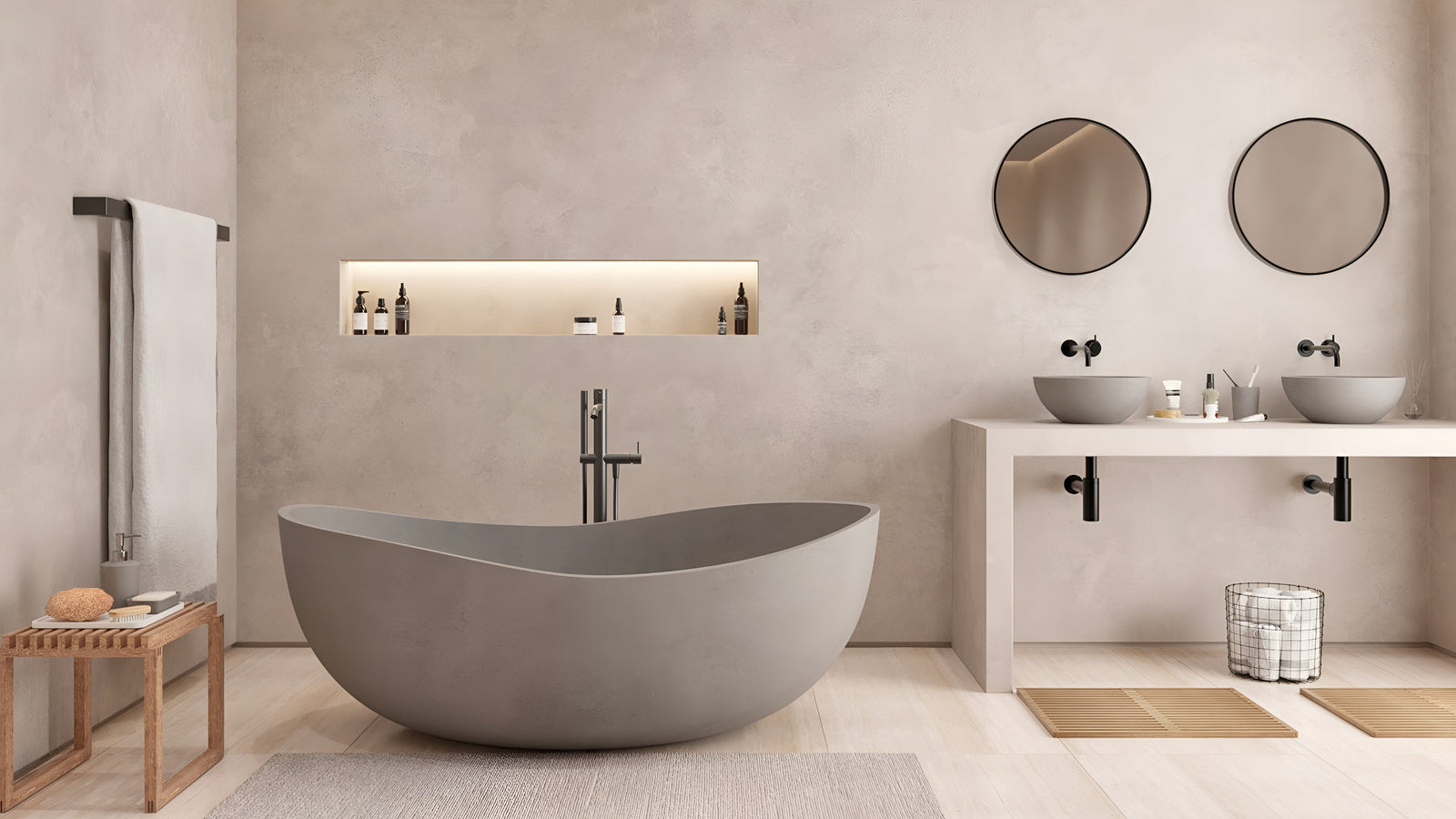







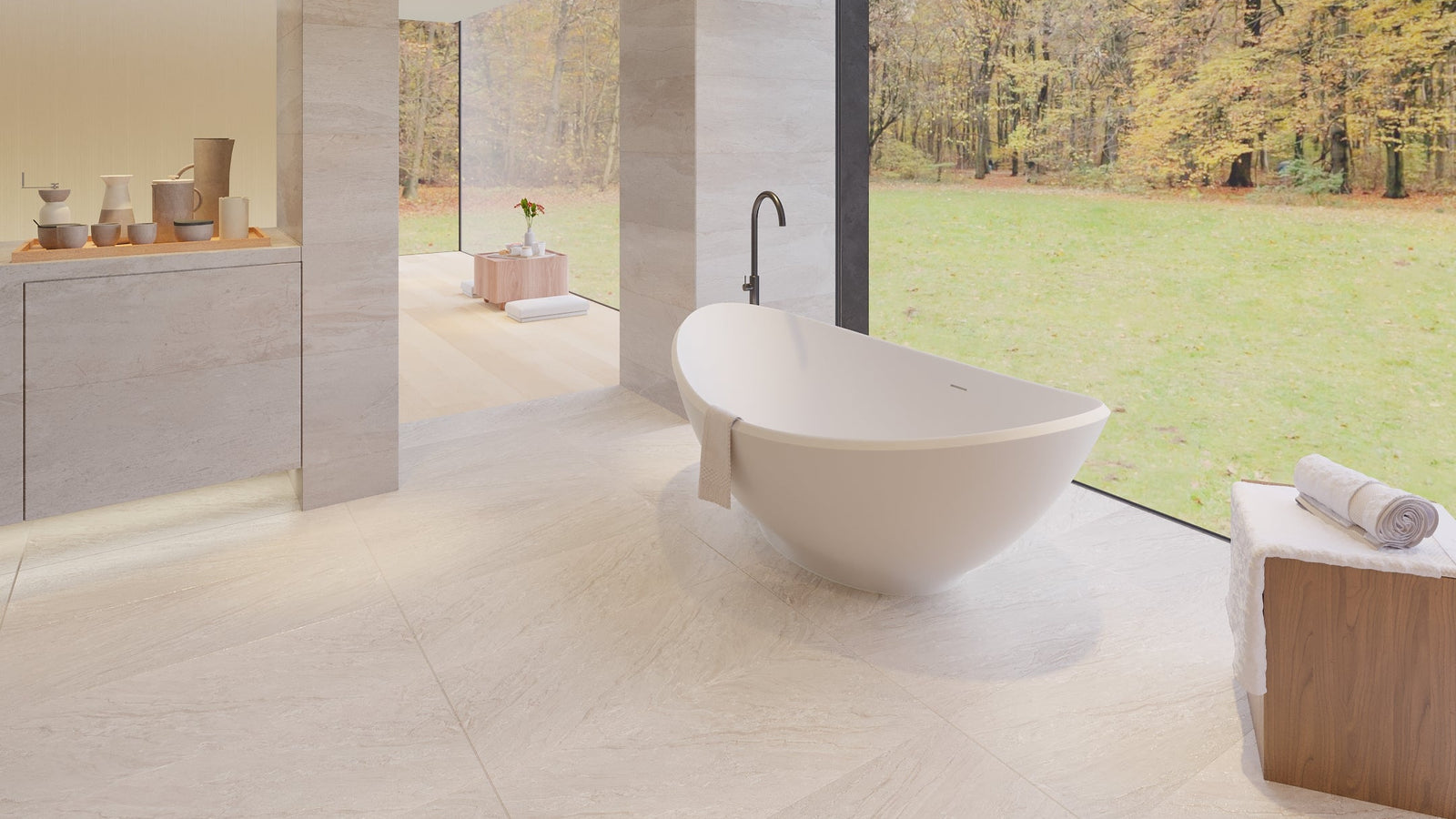



Freestanding soaking bathtubs pair a deep soak with the design freedom of a standalone fixture. Unlike a built-in tub, the exterior stays visible. That makes shape, material, and placement key parts of the bathroom's overall design.
Choosing the right bathtub takes more than looks. Interior soaking depth, usable length, shape, and material all affect comfort, installation, and long-term satisfaction. Knowing these differences helps narrow the options before you tackle plumbing, faucet placement, and finish coordination.
What Makes a Tub a Soaking Tub
Soaking tubs are built to immerse you in more water than a conventional bathtub. Many offer about 15 to 20 inches of usable water depth, though the exact figure varies by model. Soaking depth is usually measured from the interior bottom to the overflow opening or the specified maximum waterline, not to the top of the rim. Interior shape, backrest angle, and your height also affect how comfortably you can soak. A deep soaking tub may provide greater immersion, but interior dimensions and backrest design are equally important.
A soaking tub can be freestanding, alcove, or drop-in. The label describes how the tub bathes you, not how it is installed. Two tubs with similar exterior dimensions may offer very different interior space and soaking comfort, so if you are shopping for a small soaking tub for a compact bathroom, check the interior basin dimensions before you commit. Compare manufacturer specifications rather than relying on exterior measurements alone.
Why Freestanding Works
Freestanding bathtubs give you more flexibility in bathroom design. Depending on the model, you can place one beneath a window, use it as a focal point in an open room, or fit it into a compact layout. The exposed exterior lets the shape and finish stand out as architectural elements. Nothing is hidden inside a surrounding enclosure.
That flexibility needs careful planning. Check bathtub weight, floor support, drain location, faucet compatibility, and surrounding clearances before installation. A qualified contractor or plumber can verify these requirements early in the renovation. That reduces the chance of costly adjustments after flooring and plumbing are done. Buyers who plan the bathtub, filler, and plumbing together get a more cohesive and practical installation.
Materials for Freestanding Soaking Bathtubs
Cast Acrylic
Cast acrylic is a popular material for freestanding bathtubs. It is relatively lightweight, has a smooth surface, and comes in many shapes and sizes. It usually has a glossy finish and often costs less than premium composite or natural stone options. Acrylic also insulates well. Still, how long the water stays warm depends on the tub's construction, insulation, wall thickness, and surroundings.
Acrylic is lighter than materials like solid surface, so it is easier to transport and install. Material choice still involves trade-offs: appearance, surface feel, durability, maintenance, and overall construction. Buyers who want a heavier, stone-like finish may prefer solid surface or other premium materials.
Solid Surface, Concrete, and Stone
Premium freestanding bathtubs come in solid surface, concrete, and stone. Each material has its own look and practical traits. Solid surface is prized for its smooth, seamless finish, solid feel, and design flexibility in modern bathrooms. Depending on its composition, it may also allow minor scratches to be repaired, which helps keep it looking good over time.
Concrete bathtubs have a sculptural, architectural look. Subtle variations in color and texture give each piece its own character. Natural stone offers unique veining and patterns, making it a striking focal point in the bathroom. Both materials usually need more thought about weight, structural support, and maintenance.
Material also affects heat retention, surface care, installation, and long-term durability. These traits vary by manufacturer and product. Before buying, check the specifications and maintenance instructions for your chosen bathtub.

Length and Depth: The Two Numbers That Decide Comfort
Interior soaking depth and usable length are among the most important measurements when choosing freestanding soaking bathtubs. Soaking depth determines how much of the body can be submerged, while interior length influences how comfortably a bather can recline. The shape of the interior, backrest angle, and available legroom also contribute significantly to the overall bathing experience.
Many freestanding bathtubs measure approximately 55 to 65 inches in overall length, although larger and smaller models are available. Soaking tubs commonly offer 15 to 20 inches of usable water depth, with some deeper models exceeding 20 inches. However, exterior dimensions alone don't indicate how spacious a bathtub will feel. Taller bathers may benefit from additional interior length and soaking depth, while smaller bathrooms often require a more compact footprint. Always compare manufacturer specifications, particularly interior dimensions and water depth measured to the overflow or maximum permitted waterline.
Measurement |
Range shown in current tub listings |
What it affects |
|---|---|---|
Interior soaking depth |
15 to 20 inches typical |
How much of the body stays submerged |
Deeper soaking models |
Over 20 inches on select models |
Greater immersion, depending on body size and tub shape |
Overall length |
55 to 65 inches for many models |
Legroom and fit within the room |
Shape options |
Oval, rectangular, and free-form |
Visual style and use of floor space |
Choosing Between Oval and Rectangular
Oval bathtubs bring softer, flowing lines. They complement bathrooms with angular features like rectangular tiles, mirrors, and vanities. Rectangular designs look more structured and architectural. They suit contemporary or minimalist interiors. Short on space? back-to-wall bathtubs are an alternative. They combine the look of a freestanding tub with more efficient use of floor space.
Looks aside, check the tub's actual footprint, interior dimensions, and surrounding clearances. Oval, rectangular, and free-form designs can differ a lot in usable bathing space, even when exterior dimensions are similar. Read the manufacturer's specifications. Make sure there is enough clearance to enter and exit the tub, open nearby doors and drawers, and reach the plumbing for maintenance.
Filler and Plumbing Planning
Installing a freestanding bathtub takes careful planning. The tub, faucet, water supply, and drainage must all work together. Many designs pair with a floor-mounted tub filler. Wall-mounted and deck-mounted setups can also work, depending on the bathtub's design and placement. The faucet needs enough spout reach and clearance to send water into the tub without hitting the rim.
Drain placement matters just as much. Some bathtubs have a central drain. Others use an offset drain, which changes the plumbing rough-in. The drain connection and the filler's water supply are separate parts, and each needs its own plan. Before installation, confirm the bathtub's technical specifications, faucet compatibility, and plumbing requirements with a qualified plumber.
Choosing the bathtub and fixtures together helps ensure compatibility. It also lets finishes and placement complement the overall bathroom design.
A Pre-Purchase Checklist
Measure the finished bathroom. Account for door swings, nearby fixtures, and clearance around the tub.
Compare usable interior length and soaking depth. Do not rely on exterior measurements alone.
Check the tub's overall dimensions. Confirm the footprint fits comfortably in the available space.
Verify the floor can support the tub. Include the weight of the tub when filled with water and occupied.
Choose a compatible bathtub filler. Confirm the water supply, spout reach, and drain locations before installation.
Review the manufacturer's cleaning and maintenance steps for the specific tub material.
Confirm the delivery route: doorways, hallways, staircases, and turning clearances. Make sure the tub can be moved safely into position.
Review shipping arrangements, delivery lead times, and return conditions before you order.
Seeing a Tub in Person Versus Buying Online
A showroom visit helps buyers judge a bathtub's proportions, surface finish, and overall look. But physical displays cover only part of the market. Even large showrooms cannot stock every model, material, size, or configuration.
Buying online opens up a wider selection of designs and manufacturers. You also get detailed specs, technical drawings, installation documents, and material information. These resources let homeowners, architects, and designers compare bathtubs by precise measurements and project needs, not appearance alone.
When you buy a premium bathtub online, choose an authorized retailer. Manufacturer-backed warranties, accurate product information, knowledgeable help, and clear delivery terms all help customers decide with confidence.
Mihodo specializes in premium bathroom fixtures, including freestanding and soaking bathtubs in distinctive materials such as solid surface and concrete. Our curated selection also includes designer washbasins, bathroom vanities, faucets, towel warmers, and coordinating fixtures from established European and American manufacturers. Customers get knowledgeable product support and free shipping throughout the contiguous United States.

Coordinating the Tub With the Rest of the Bathroom
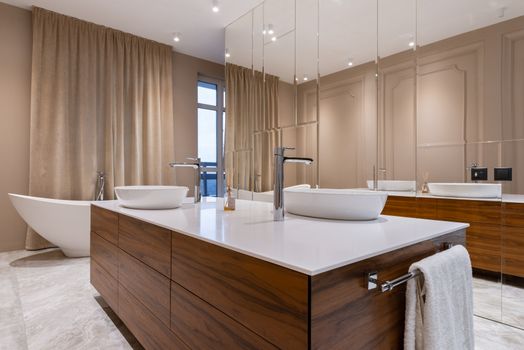
A freestanding bathtub often becomes the focal point of the room. That makes the surrounding fixtures and finishes key to the overall design. Good coordination creates a cohesive look. It also keeps the space comfortable and functional.
Consider proportion and scale. Choose a vanity and fixtures that complement the bathtub's dimensions without overwhelming the room. Balance matters most in bathrooms with large soaking tubs.
Coordinate metal finishes. Match or complement the bathtub filler, basin faucets, and other hardware for a consistent design. Carefully chosen contrasting finishes can work well too.
Plan for towels and accessories. Keep towel storage or a towel warmer within easy reach of the bathtub. Allow adequate clearances and follow applicable electrical safety requirements.
Incorporate appropriate lighting. Combine ambient and accent lighting to highlight the bathtub's design. Provide enough light for safe entry and exit. Lighting placement should comply with bathroom electrical requirements.
Maintain comfortable circulation. Leave enough space between the bathtub, vanity, and other fixtures. This ensures unobstructed movement and easy access to storage.
Frequently Asked Questions
How deep should a freestanding soaking tub be?
Most soaking bathtubs offer about 15 to 20 inches of usable water depth. Some models go beyond 20 inches. The ideal depth depends on your height, how much immersion you want, and how easy entry and exit need to be. Interior shape and backrest angle also affect comfort. Always check the manufacturer's specified soaking depth. It is usually measured from the interior bottom to the overflow opening or maximum permitted waterline. Do not rely on the bathtub's overall height.
What is the difference between acrylic and solid surface bathtubs?
Acrylic bathtubs are lightweight and relatively affordable. They come in many shapes and sizes. Solid surface bathtubs feel more substantial. They offer a smooth, stone-like look and distinctive architectural designs. Depending on the material's composition, minor scratches and surface imperfections may also be repairable.
Both materials can provide comfortable bathing experiences. Heat retention, maintenance requirements, and durability depend on the specific construction and manufacturer. Solid surface appeals to buyers who want premium materials, distinctive finishes, and a substantial, sculptural appearance.
What length do most freestanding tubs come in?
Most freestanding bathtubs run about 55 to 65 inches long. Compact and oversized designs are also available. Taller bathers may want longer interior dimensions. Smaller bathrooms often need a more compact footprint. Exterior length does not always reflect usable bathing space. So compare interior dimensions, backrest angles, and soaking depth before you pick a model.
Do freestanding tubs need a separate filler?
Freestanding bathtubs need a compatible water delivery system. A floor-mounted filler is not always required. Depending on the tub's design and placement, wall-mounted, floor-mounted, or deck-mounted faucets may work. The faucet must have enough spout reach and clearance. The tub's drainage system must also line up with the required plumbing connections. Check the manufacturer's installation specs and consult a qualified plumber before you pick fixtures or finish the rough-in.
Can you buy a freestanding soaking tub online?
Yes. Authorized online retailers such as Mihodo sell premium freestanding soaking bathtubs, including solid surface and concrete designs. Manufacturer documents list dimensions, materials, soaking depth, and installation requirements. Customers can compare these details before ordering.
Mihodo offers knowledgeable product support and free shipping throughout the contiguous United States.