Choosing the right bathtub means balancing comfort, layout, material, installation, and delivery planning. A bathtub may look beautiful on its own, but it still needs to fit the room, support the way the bathroom will be used, and work with the realities of remodeling.
This guide explains the main bathtub styles, material considerations, sizing details, and planning factors to review before choosing a premium bathtub for your bathroom. For layout-specific help, use our Bathtub Fit Assistant to compare your room dimensions against compatible tub styles.
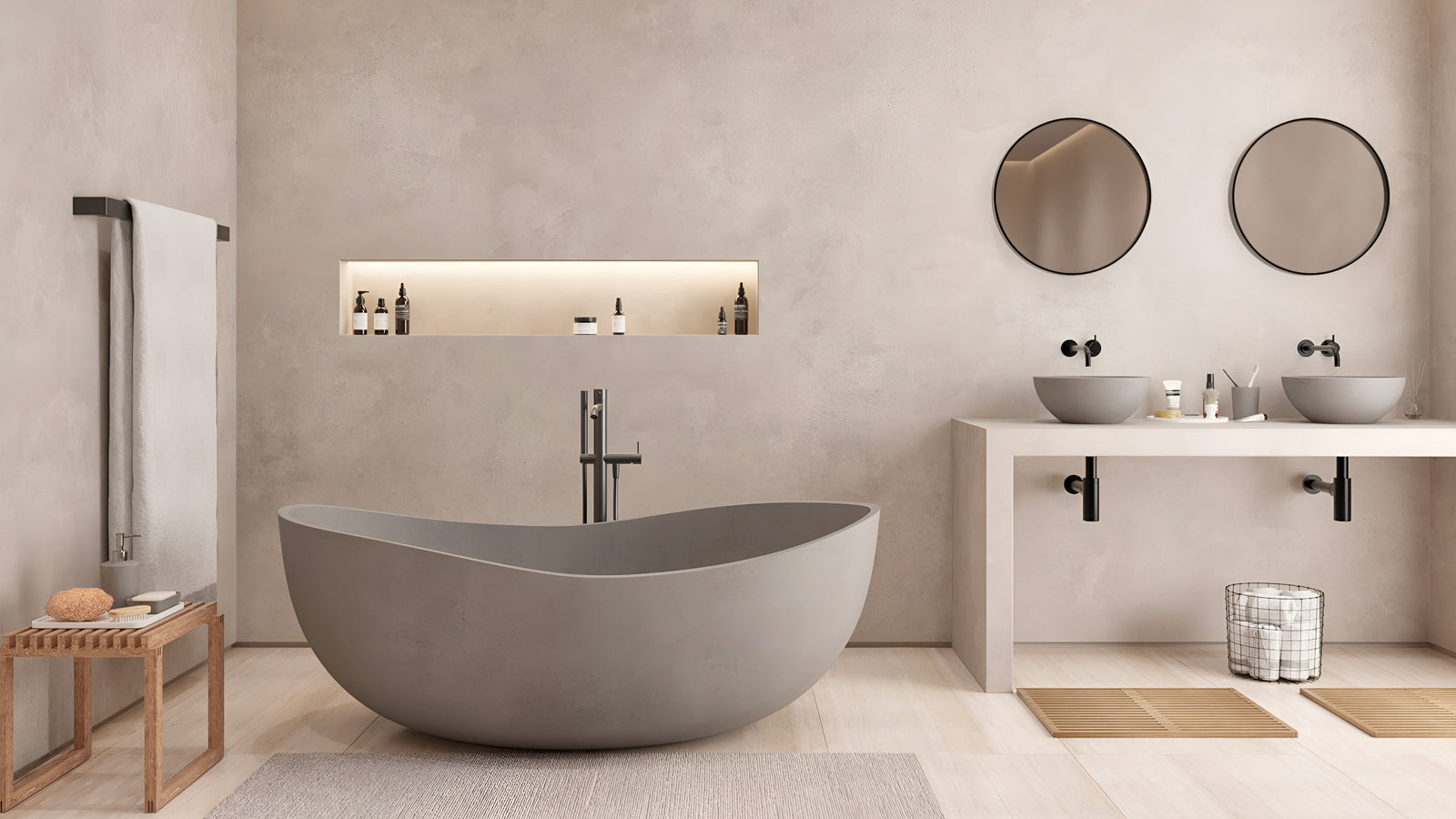
The best bathtub type depends on the room layout, the amount of available clearance, and the design effect you want to create. Freestanding tubs offer a sculptural presence and work best when the room has enough space around the tub for access, cleaning, and visual balance.
Back-to-wall and corner-friendly tubs can be better choices when space is more limited. They still provide a strong design presence, but use wall placement more efficiently than a fully freestanding layout.
A freestanding bathtub can become the focal point of the bathroom, especially in a layout with enough room around the tub. This style works well when the tub can be placed with comfortable clearance and does not interfere with walking paths, vanities, doors, or shower access.
A back-to-wall bathtub is not a lesser option. In many remodels, it is the smarter choice because it gives the bathroom a clean, premium look while reducing the amount of clearance needed behind the tub. Back-to-wall corner models can also help make better use of tighter layouts.
You can compare our freestanding bathtubs and back-to-wall bathtubs while planning your layout.
Bathtub length is important, but it is not the only measurement that matters. Projection into the room, side clearance, walking space, and nearby fixtures often determine whether a tub will feel comfortable once installed.
Before choosing a bathtub, measure the available wall space, the depth of the room, the path around the tub, and the relationship to nearby vanities, toilets, showers, and doors. A tub that technically fits may still feel too tight if it leaves limited movement or cleaning access.
For more detailed sizing guidance, review our Bathtub Size Guide and use the Bathtub Fit Assistant before making a final decision.
Bathtub material affects weight, finish, feel, durability, care requirements, and the overall impression of the room. Acrylic tubs are common and lightweight, which can make them practical for many projects. They are widely available and can be easier to handle during installation.
Solid surface bathtubs offer a more substantial matte feel, with a smooth, designer-grade appearance that suits premium bathrooms. The material has a heavier presence and a refined finish that can make the tub feel more integrated with the overall design.
Not all solid surface bathtubs are made to the same standard. Material density, casting consistency, finish refinement, edge quality, drain alignment, packaging, and quality control can all affect how a tub looks, feels, installs, and holds up over time. For a deeper explanation of the material category, review our Solid Surface Material Guide.
Concrete and terrazzo bathtubs create a different effect. They are usually chosen for architectural character, texture, visual depth, and material presence. Concrete tends to feel more monolithic and understated, while terrazzo adds visible aggregate, pattern, and movement.
Concrete and terrazzo also have different care expectations than solid surface. Their long-term appearance depends heavily on the protective sealant, coating, cleaning routine, and proper maintenance. For more detail, review our Concrete & Terrazzo Material Guide.
Price is not always a perfect measure of quality. A premium tub may reflect better construction, more complex design, lower-volume production, freight, packaging, distributor support, or brand positioning. The right choice is the tub that offers the best combination of design, construction, support, care expectations, and suitability for the project.
No bathtub material should be judged by price alone. The right choice depends on the room, installation needs, finish preference, maintenance expectations, and the level of design presence you want from the bathtub.
Bathtub weight should be reviewed before ordering, especially for solid surface, concrete, terrazzo, and other heavier models, as well as upper-floor bathrooms, older homes, or complex remodels. The total installed load includes the tub, water, and occupant weight.
This does not mean a heavier bathtub is impractical. It simply means floor support, access path, and installation details should be reviewed in advance by a qualified contractor. Planning these details early helps avoid problems during delivery or installation.
Premium bathtubs may require longer lead times than smaller fixtures, especially when they are imported, made in smaller batches, or shipped by freight. Delivery planning should be part of the decision, not an afterthought.
Large bathtubs typically ship by freight carrier rather than standard parcel service. This may involve delivery appointments, curbside freight procedures, and additional handling considerations once the tub arrives. Before ordering, confirm that the delivery location can receive a large, heavy fixture safely.
Before choosing a bathtub, confirm the finished room dimensions, tub size, projection, clearance, plumbing location, floor support, delivery access, material care requirements, and installation requirements. These details matter more with large fixtures because changes can be difficult once the tub has shipped.
You can explore our Ideavit bathtubs for solid surface, concrete, and terrazzo bathtub options, use the Bathtub Fit Assistant to compare compatible tub styles, or review the Bathroom ROI Calculator when thinking through the broader remodel investment.
The Bathtub Fit Assistant is designed as a planning aid, not a substitute for contractor verification. Final measurements, plumbing, floor support, material care requirements, and installation conditions should always be confirmed before purchase.
The best bathtub for a remodel depends on the room size, layout, plumbing, floor support, desired look, material preference, and care expectations. Freestanding tubs work best with generous clearance, while back-to-wall and corner-friendly tubs can be better for tighter layouts.
Solid surface bathtubs offer a heavier, more substantial matte feel and a designer-grade appearance, while acrylic tubs are lighter and more common. However, not all solid surface tubs are made to the same standard. Finish quality, material density, casting consistency, edge detail, packaging, and manufacturer support can all affect the final product. The better choice depends on the project, installation needs, finish preference, and budget.
Concrete and terrazzo bathtubs are not necessarily hard to maintain, but they require the right care routine. Their protective sealant or coating matters, so harsh cleaners, acids, abrasives, and improper cleaning products should be avoided. Always follow the manufacturer’s care instructions for the specific tub.
No. Back-to-wall tubs can be a very strong premium choice, especially when the bathroom layout does not allow ideal clearance around a fully freestanding tub. They can preserve visual impact while using space more efficiently.
Confirm the tub dimensions, projection into the room, clearance, plumbing location, floor support, delivery access, material care requirements, and installation requirements. These details should be reviewed before purchase, especially for large or heavy bathtubs.