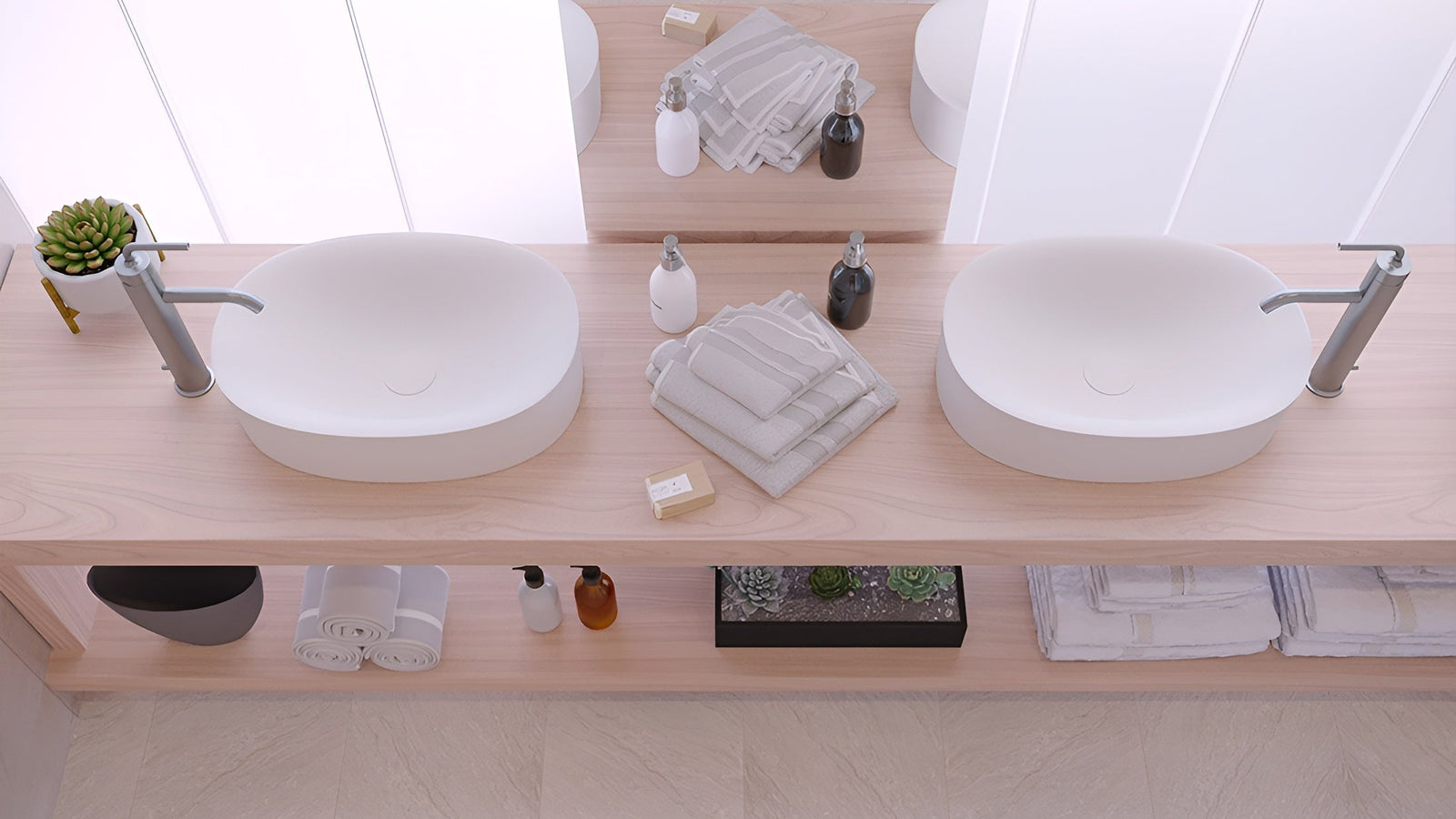
Concrete and terrazzo bathroom fixtures offer a very different design effect from acrylic, ceramic, or solid surface. They are often chosen for their architectural character, material depth, texture, weight, and visual presence.
At the same time, concrete and terrazzo should not be treated as carefree materials. Their performance depends on the mix, casting method, curing process, surface finish, sealant, coating, care routine, and installation planning. A concrete or terrazzo washbasin may look simple from the outside, but the finished product is the result of material composition, surface protection, and careful handling.
This guide explains what concrete and terrazzo bathroom fixtures are, how they differ from solid surface, and what to check before choosing a concrete bathtub, concrete washbasin, or terrazzo washbasin.
Concrete is a composite material made from cement, water, and aggregates. In bathroom fixtures, the mix is usually more refined than ordinary construction concrete. Manufacturers may use fine aggregates, polymers, fibers, pigments, sealants, coatings, or other additives to create a smoother, stronger, and more usable finished surface.
For bathtubs and washbasins, concrete is usually chosen for its weight, texture, and architectural look. It can feel more elemental and expressive than smoother, more uniform materials. The visual appeal often comes from the material itself, including subtle variation, depth, tone, and surface character.
Because concrete is naturally porous, the finished surface usually depends on a protective sealant or coating system. This is especially important in bathrooms, where water, soap, toothpaste, cosmetics, and cleaning products may come into regular contact with the fixture.
Terrazzo is a composite surface made from decorative chips or aggregates set into a binder and then finished to reveal the pattern. The visible chips may include marble, stone, glass, quartz, or other decorative materials, depending on the product.
Terrazzo can be cement-based or resin-based. This distinction matters because not every terrazzo product is made the same way. Some terrazzo is closer to polished cementitious concrete, while other terrazzo uses epoxy or resin systems.
For bathroom fixtures, terrazzo is usually chosen when the customer wants more pattern, movement, and material expression than plain concrete provides. It is especially well suited to washbasins and smaller fixtures, where the aggregate pattern can become a design feature without overwhelming the room.
Concrete and terrazzo are closely related in appearance and use, but they create different design effects.
Concrete usually has a more solid, mineral, architectural look. It may appear quiet, monolithic, and understated, especially in gray or neutral finishes. Terrazzo has more visible pattern and movement because of the decorative chips in the material.
Concrete is often chosen when the goal is a calm, sculptural, stone-like presence. Terrazzo is often chosen when the goal is a more expressive surface with visible aggregate, pattern, and design character.
Neither material is automatically better. The right choice depends on the bathroom style, surrounding finishes, maintenance expectations, and how much visual movement you want from the fixture.
Concrete and terrazzo bathroom fixtures are usually made through a more controlled process than ordinary construction concrete. The mix, mold, curing time, finishing method, and surface protection all affect the final product.
A concrete fixture may include cement, fine aggregates, water, polymers, fibers, pigments, and other additives. These ingredients help create a refined bathroom product rather than a rough structural material.
Terrazzo fixtures use a binder with decorative chips or aggregates. In cement-based terrazzo, the binder is cementitious. In resin-based terrazzo, the binder may be epoxy or another resin system. The surface is then finished to reveal the aggregate pattern.
The broader takeaway is that concrete and terrazzo fixture quality depends on more than appearance. Mix design, casting, curing, finishing, sealing, coating, and quality control all affect how the final product looks, feels, installs, and performs over time.
As one example, Ideavit describes its concrete bathroom products as being made from a composed mixture of cement, fine aggregates, water, polymers, and glass fibers. This type of mix is different from ordinary construction concrete because it is designed for finished bathroom fixtures rather than structural building work.
Ideavit also describes its terrazzo as a cement-based material made with white cement, fine aggregates, powders, micro-granulates, and chips or fragments of marble or other decorative stones. The mixture is poured into molds and naturally cured over several weeks.
This is a useful example because it shows why the term “concrete” can mean very different things depending on the product. A bathroom fixture is not simply a slab of building concrete shaped into a washbasin or bathtub. The composition, reinforcement, curing, finishing, sealing, and coating all matter.
Surface protection is one of the most important differences between concrete and many other bathroom materials. Concrete is naturally porous, so the finished fixture usually needs a protective surface system to help resist water, dirt, staining, and daily bathroom residue.
Depending on the manufacturer, this protection may include a penetrating sealant, topical coating, wax, nano-coating, or another protective finish system. The purpose is to help the fixture perform better in a wet bathroom environment.
For Ideavit concrete and terrazzo products specifically, the fixtures are treated with a food-grade sealant and a nano-coating designed to repel water and help protect the surface against dirt and stains.
This does not mean concrete and terrazzo should be treated casually. The surface protection still needs proper care. Strong cleaners, acids, abrasives, and harsh chemicals can damage the finish and reduce the lifespan of the protective system.
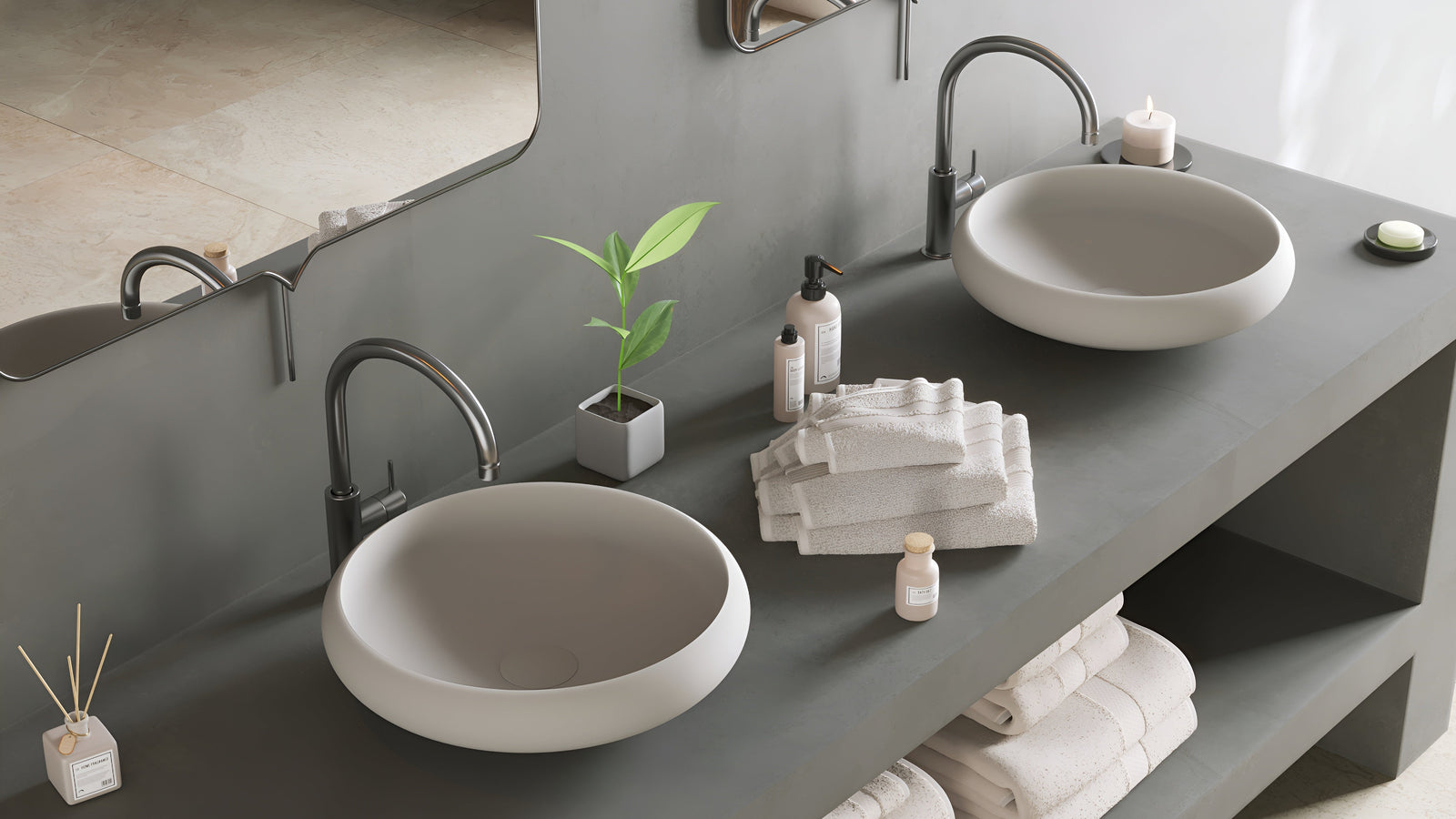
Concrete and terrazzo washbasins can make a strong design statement in powder rooms, guest baths, and primary bathrooms. The material gives the basin visual weight and texture, which can make even a smaller washbasin feel intentional and architectural.
Concrete washbasins tend to feel more monolithic and understated, while terrazzo washbasins add visible aggregate, pattern, and movement. Both materials work best when the washbasin is meant to be part of the design, not simply a background fixture.
For wall-attached washbasins, projection, wall support, faucet compatibility, drain position, and installation requirements should all be reviewed carefully. Concrete and terrazzo fixtures can be heavier than standard ceramic or lightweight composite basins, so proper support matters.
For vessel washbasins, the surrounding vanity or counter also matters. Basin height, faucet reach, splash control, drain compatibility, and cleaning access should all be planned before ordering.
Concrete and terrazzo washbasins are best chosen when the material itself is part of the design. They are meant to contribute texture, depth, and visual character to the room.
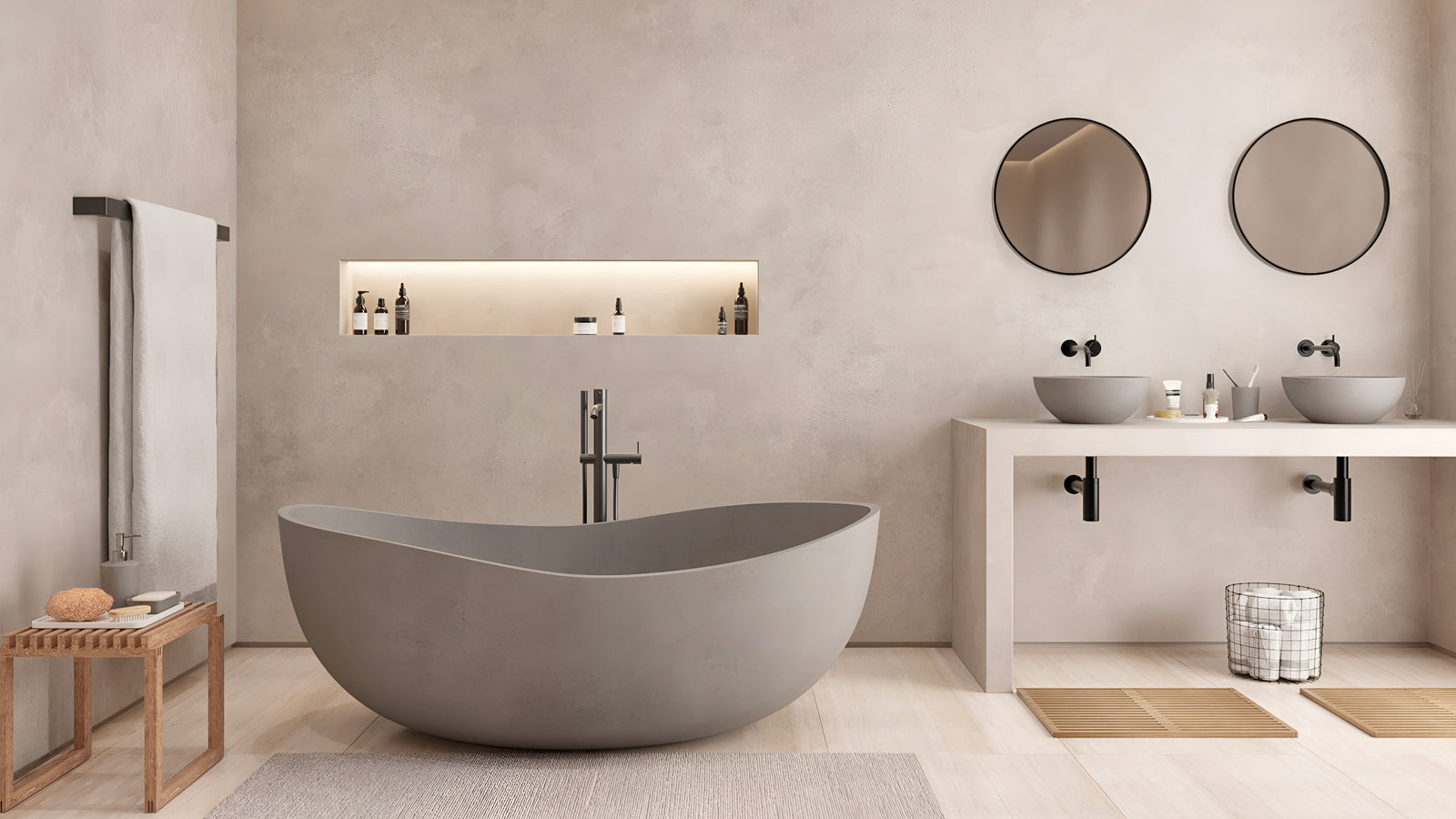
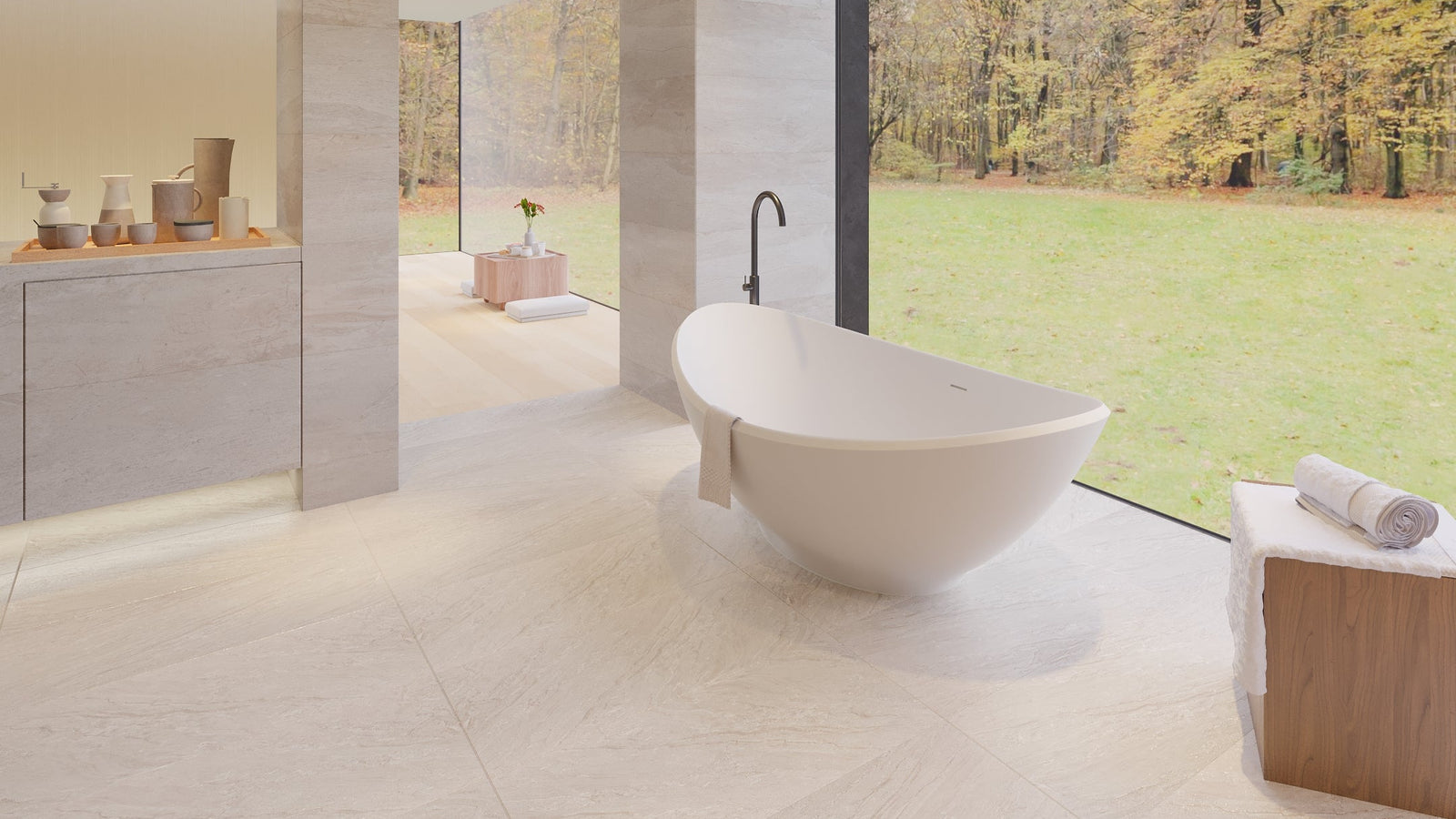
Concrete bathtubs have a substantial, sculptural presence. They can make a bathroom feel more architectural and custom, especially when paired with stone, plaster, wood, matte metal, or other natural-feeling finishes.
Because concrete bathtubs are large and heavy, installation planning is especially important. Confirm the finished tub dimensions, weight, delivery access, floor support, plumbing location, drain compatibility, and handling requirements before ordering.
Material appearance should also be considered carefully. A concrete tub may have more natural visual variation than a smooth white solid surface tub. That variation is often part of the appeal, but it should match the overall design direction of the bathroom.
Concrete tubs are usually chosen for character and presence, not because they are the easiest bathtub material category to own. Their long-term appearance depends on proper cleaning, care, and respect for the protective finish.
Solid surface, concrete, and terrazzo can all be used for premium bathroom fixtures, but they have different material personalities.
Solid surface is usually chosen for a smooth, controlled matte appearance and a more uniform finish. It often creates a seamless-looking, refined, and contemporary effect. To learn more about that material category, review our Solid Surface Material Guide.
Concrete and terrazzo are usually chosen for a more architectural, material-driven look. Concrete offers mineral depth and visual weight, while terrazzo adds pattern and aggregate movement. These materials can feel more handcrafted, expressive, and elemental than solid surface.
The care expectations are also different. Solid surface is generally valued for its non-porous, restorable surface. Concrete and terrazzo depend more heavily on their sealant, coating, cleaning routine, and surface protection. Neither category is automatically better. They simply suit different design goals and ownership expectations.
Ceramic and vitreous china washbasins are hard, glossy, familiar, and widely used. They are often selected when the bathroom calls for a crisp glazed surface, traditional fixture appearance, or easy-to-understand maintenance routine.
Concrete and terrazzo create a different feeling. They are usually matte or softly finished rather than glossy, and they bring more texture and material depth into the room. A concrete or terrazzo basin can feel more like an architectural object than a standard bathroom fixture.
Ceramic may be the better choice when the goal is a classic glazed surface with broad familiarity. Concrete or terrazzo may be the better choice when the fixture itself is meant to become part of the design language of the room.
Concrete and terrazzo should be expected to have more visual character than highly uniform materials. Depending on the product, this may include subtle tone variation, surface movement, visible aggregate, or natural-looking differences from piece to piece.
This variation is not necessarily a flaw. In many cases, it is part of the reason to choose the material. Concrete and terrazzo are often selected because they do not look overly manufactured or flat.
However, shoppers should understand the difference between material character and a defect. Minor visual variation can be part of the intended appearance. Damage, cracks, improper sealing, rough finishing, or inconsistent coating are different issues and should be handled according to the manufacturer’s warranty and inspection process.
Care instructions vary by manufacturer, but concrete and terrazzo bathroom fixtures generally need gentle cleaning because the protective surface is part of the product’s performance. Mild soap, lukewarm water, and a soft cloth are usually safer than harsh bathroom cleaners.
The surface should be cleaned regularly so common bathroom residue, such as toothpaste, soap, cosmetics, and mineral deposits, does not build up over time. After cleaning, the surface should be rinsed thoroughly and dried with a soft cloth to help prevent stains and preserve the finish.
For Ideavit concrete and terrazzo products specifically, the recommended routine is mild soap, lukewarm water, thorough rinsing, and drying with a soft cloth. Ideavit also recommends avoiding strong corrosive cleaners, acids, descalers, cleaning vinegar, ammonia, bleach, chlorine, alcohol, glass cleaners, wire brushes, abrasive cleaning products, and sharp objects.
Some concrete and terrazzo fixtures may also benefit from periodic protective maintenance. Ideavit recommends additional protection once or twice a year with a suitable wax for concrete and terrazzo products. Always follow the manufacturer’s current care instructions for the specific product.
Before choosing a concrete bathtub, concrete washbasin, or terrazzo washbasin, review more than the color and shape. These fixtures can be beautiful, but they require planning.
For bathtub planning, review our Bathtub Buying Guide, Bathtub Size Guide, and Bathtub Fit Assistant. For washbasin planning, review our Washbasin Buying Guide or use the Vanity & Washbasin Fit Assistant to compare size, projection, and clearance.
Concrete and terrazzo bathroom fixtures are best chosen when the material is part of the design vision. They offer texture, weight, depth, and architectural character that smoother materials may not provide.
They also require realistic expectations. The protective surface matters, cleaning habits matter, and installation planning matters. A concrete bathtub, concrete washbasin, or terrazzo washbasin should be selected for the right room, the right design direction, and the right level of care.
Before ordering, confirm dimensions, plumbing, drain compatibility, overflow design, wall support, floor support, delivery access, care requirements, and installation conditions with a qualified professional.
All Mihodo planning tools and guides are intended as planning aids, not substitutes for contractor verification. Final measurements, plumbing, structural support, and installation requirements should always be confirmed before purchase.
No. Concrete bathroom fixtures are usually made with more refined mixes than ordinary construction concrete. Depending on the manufacturer, the mix may include fine aggregates, polymers, fibers, pigments, sealants, coatings, or other materials designed for bathroom use.
Not always. Terrazzo is related to concrete, but the exact answer depends on the binder. Some terrazzo is cement-based, while other terrazzo uses resin or epoxy. Cement-based terrazzo is closer to concrete, while resin-based terrazzo belongs to a different material system.
They are not difficult to maintain when cared for properly, but they do require the right cleaning routine. Use mild soap, lukewarm water, and a soft cloth. Avoid acids, descalers, vinegar, ammonia, bleach, chlorine, alcohol, glass cleaners, abrasive cleaners, wire brushes, and sharp objects that can damage the surface.
Concrete is naturally porous, so bathroom fixtures typically depend on a protective sealant, coating, or finish system. The exact surface protection varies by manufacturer and product line, so always follow the care instructions for the specific fixture.
Yes, staining can occur if the protective surface is damaged, worn, or exposed to harsh substances. Regular cleaning, gentle products, drying after use, and periodic protective maintenance can help preserve the appearance of the fixture.
Concrete bathtubs can be heavy compared with many acrylic or lighter composite tubs. Always confirm the product weight, delivery path, floor support, and installation requirements before ordering.
Not necessarily. Concrete and solid surface serve different design goals. Concrete and terrazzo offer more texture, material character, and architectural presence. Solid surface usually offers a smoother, more uniform matte appearance and different maintenance expectations. The better choice depends on the room, design direction, installation conditions, and care preferences.
Terrazzo adds visible decorative aggregate, pattern, and movement. It can feel more expressive than plain concrete while still offering a mineral, architectural look. Plain concrete is often quieter and more understated, while terrazzo has more visual activity.