Choosing the right washbasin means balancing size, projection, installation style, faucet compatibility, material, care requirements, and how much visual space the bathroom needs. In compact bathrooms and powder rooms especially, the washbasin can have a major effect on how open or crowded the room feels.
This guide explains the main washbasin styles to consider, including wall-attached washbasins and vessel washbasins, along with the layout details to review before choosing one for your bathroom. For layout help, use our Vanity & Washbasin Fit Assistant to compare washbasin and vanity options based on your available space.
A wall-attached washbasin mounts directly to the wall instead of sitting on a vanity or countertop. This keeps the floor more open and can make a compact bathroom, powder room, or guest bath feel lighter and less crowded.
Unlike a basic utility-style wall fixture, a design-forward wall-attached washbasin is intended to be seen. Its shape, material, projection, and proportions all contribute to the finished look of the room.
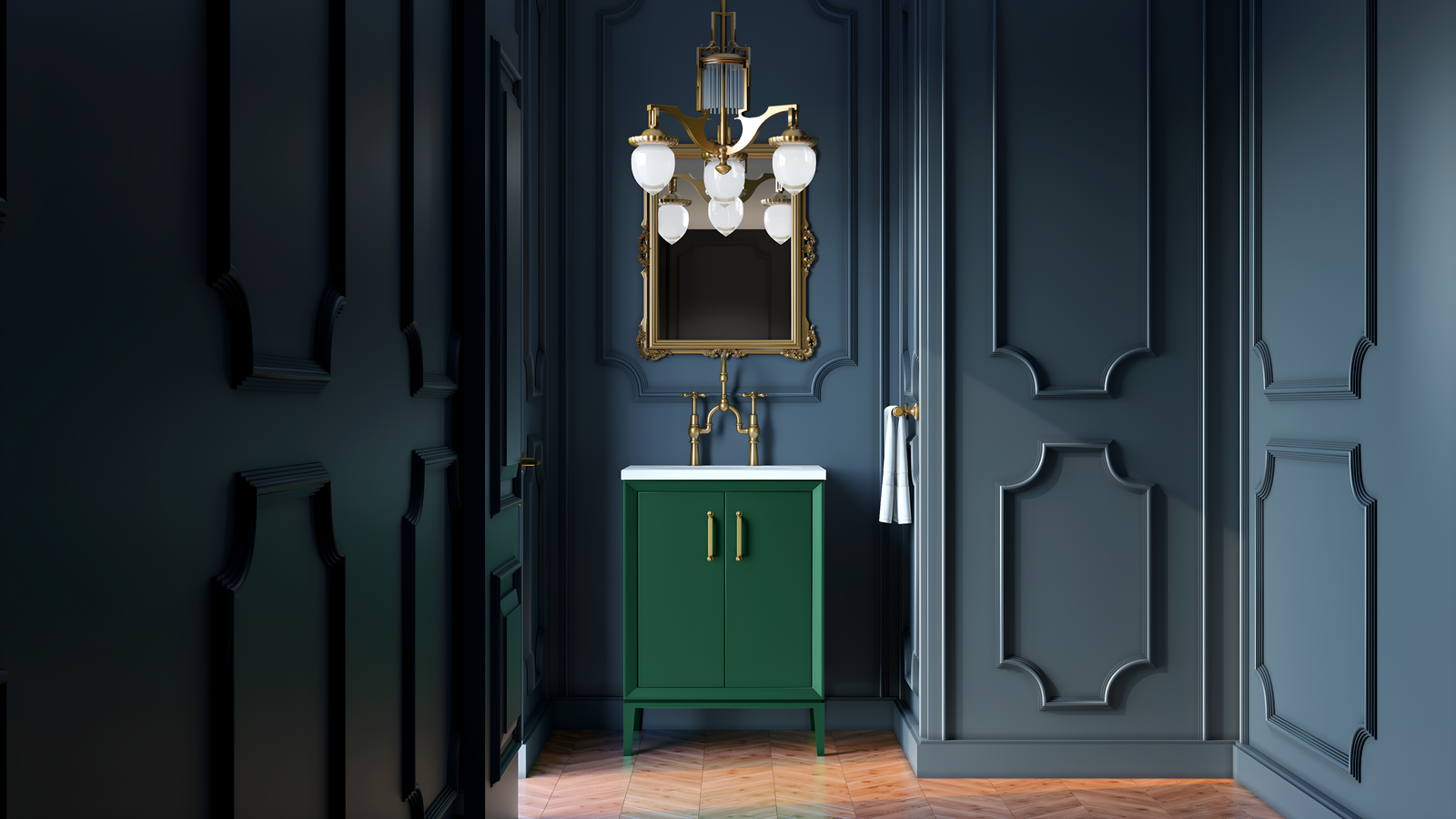
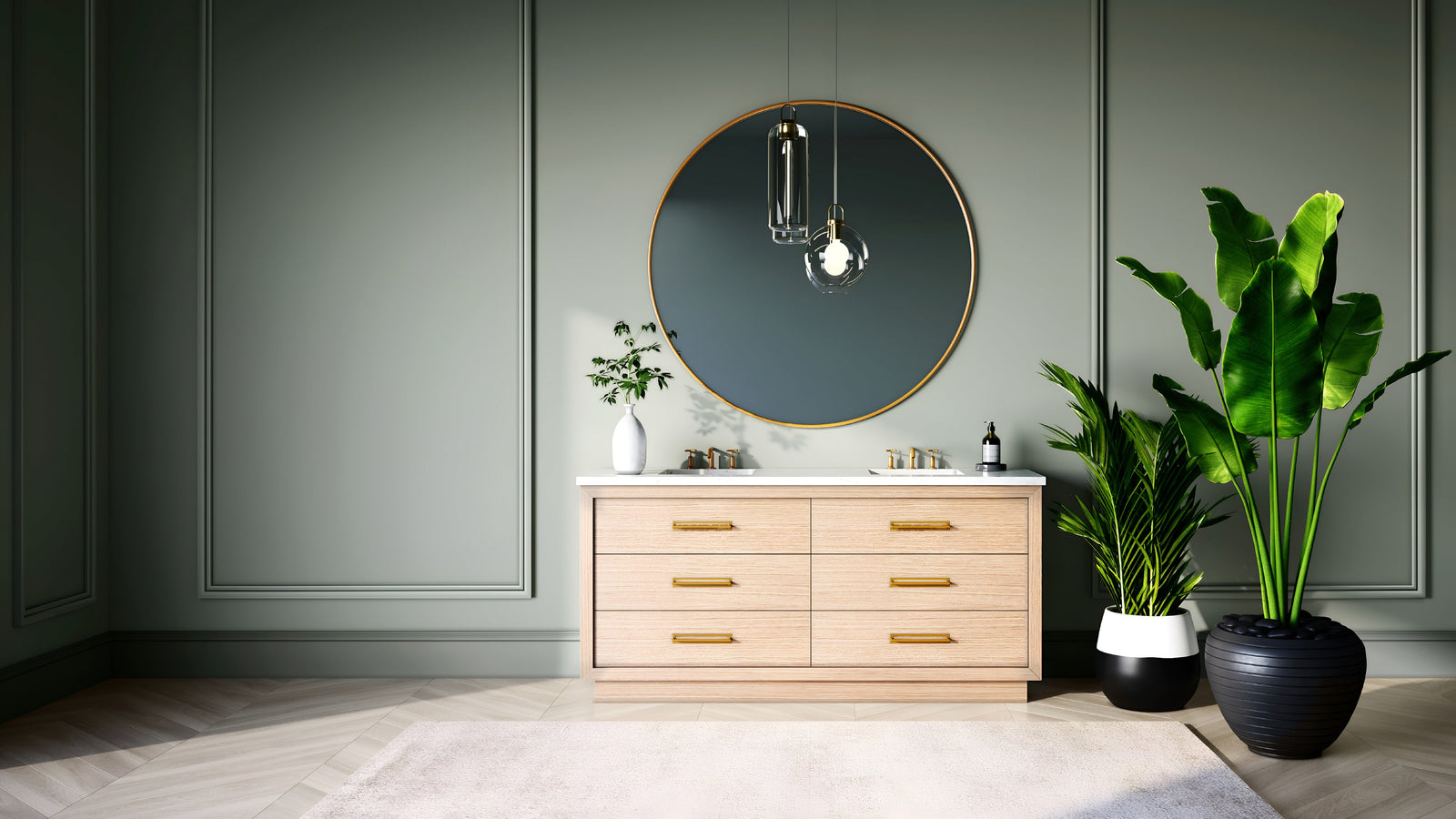
A vanity is usually the better choice when enclosed storage is important. It can provide cabinet space, countertop area, and a more furniture-like presence in the bathroom.
A wall-attached washbasin is often the better choice when clearance and visual openness matter more than storage. This can be especially useful in powder rooms, narrow bathrooms, and layouts where a vanity would project too far into the room.
If you are deciding between a compact vanity and a wall-attached washbasin, review our Small Bathroom Vanity Guide for more guidance on width, projection, and storage tradeoffs.
Washbasin size should be based on both wall width and projection into the room. Width affects how much presence the washbasin has on the wall, but projection often determines whether the bathroom feels comfortable in daily use.
A compact washbasin can be ideal for a powder room or narrow guest bath. A larger washbasin can create a stronger design statement in a bathroom with more wall space. The right size should feel intentional, not simply as small or as large as the room can physically accept.
You can compare our compact wall-mounted washbasins and large wall-mounted washbasins to review different proportions and layouts.
Projection is one of the most important measurements when choosing a washbasin. A washbasin that extends too far into the room can interfere with walking space, door swing, toilet clearance, or access to a shower.
Before choosing a washbasin, measure the available wall width, the distance into the room, and the clearance around nearby fixtures. A wider but shallower washbasin may sometimes work better than a narrower model with more projection.
Material and finish affect the way a washbasin feels in the room. A refined matte surface, clean shape, and well-proportioned form can make a washbasin feel more architectural and intentional than a standard fixture.
Solid surface washbasins offer a smooth, controlled matte appearance with a clean, designer-grade look. They can work especially well when the goal is a refined, seamless-looking fixture with a quieter visual presence.
Not all solid surface washbasins are made to the same standard. Material formulation, casting quality, surface refinement, edge detail, basin slope, drain compatibility, overflow design, and finish consistency can all affect the final product. For more detail, review our Solid Surface Material Guide.
Concrete and terrazzo washbasins create a different effect. They are usually chosen for architectural character, texture, visual depth, and material presence. Concrete tends to feel more monolithic and understated, while terrazzo adds visible aggregate, pattern, and movement.
Concrete and terrazzo also have different care expectations than solid surface. Their long-term appearance depends heavily on the protective sealant, coating, cleaning routine, and proper maintenance. For more detail, review our Concrete & Terrazzo Material Guide.
For premium bathrooms, the goal is not only to fit the space. The washbasin should also suit the surrounding materials, faucet style, mirror, lighting, maintenance expectations, and overall design direction.
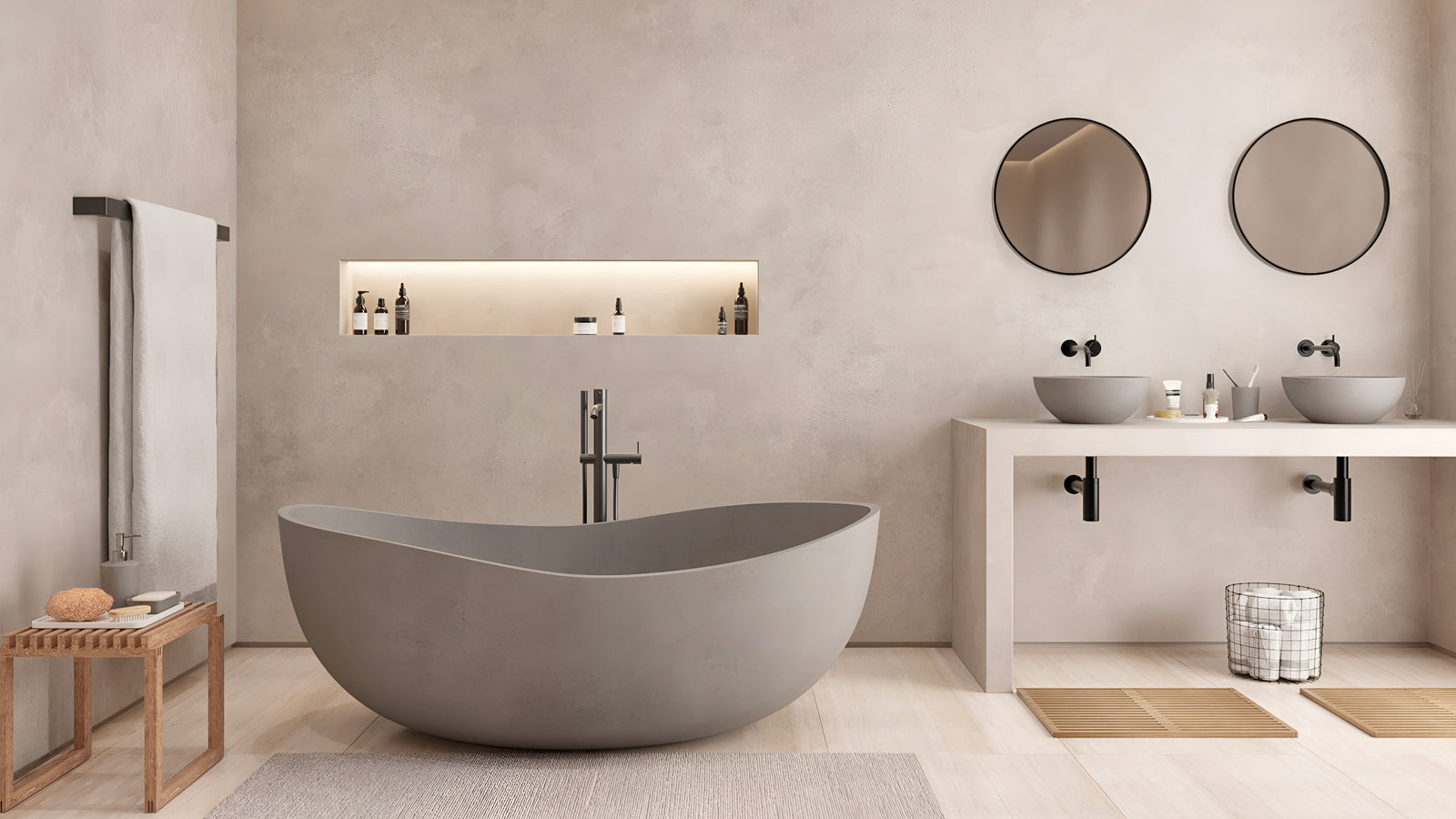
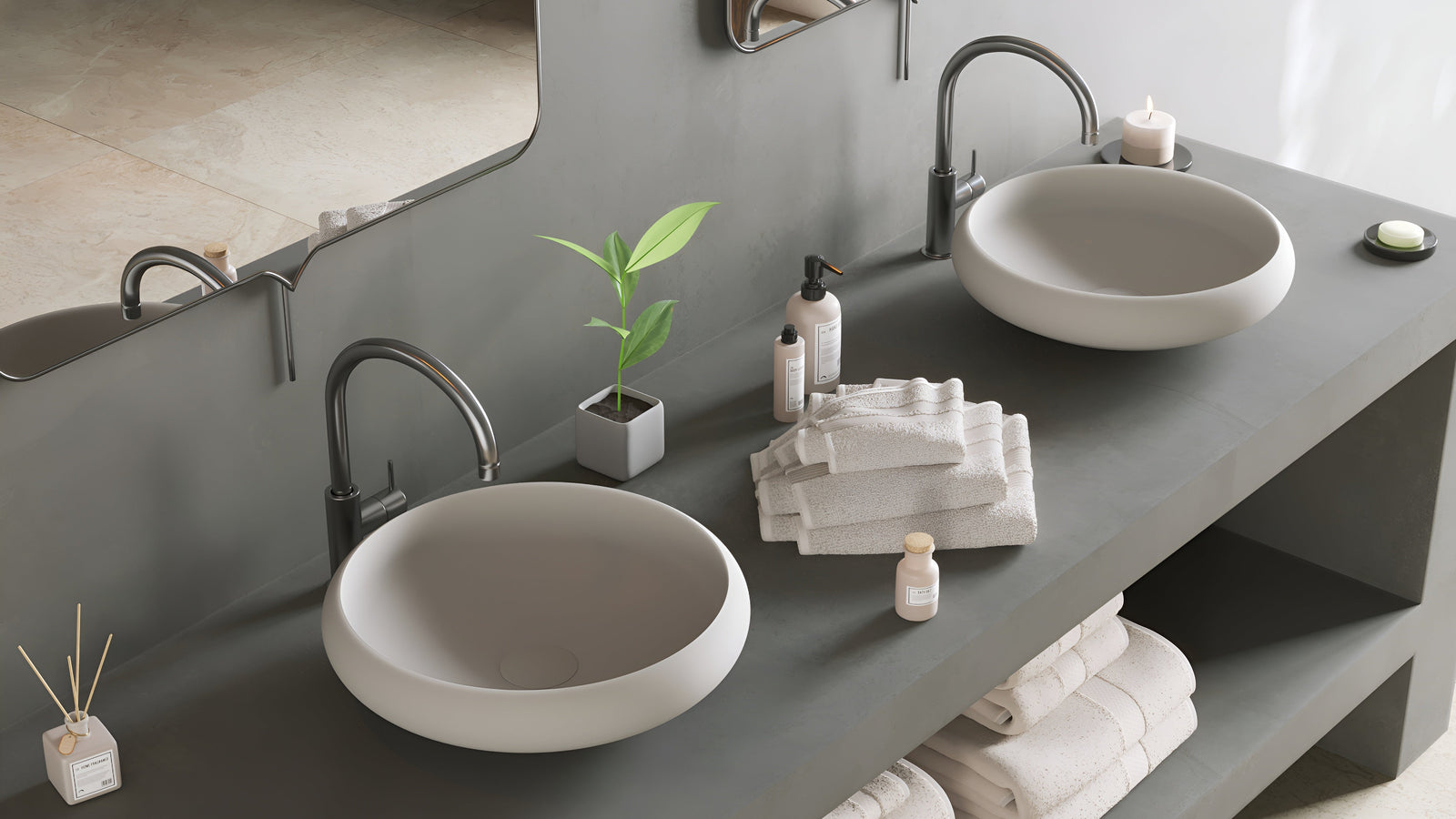
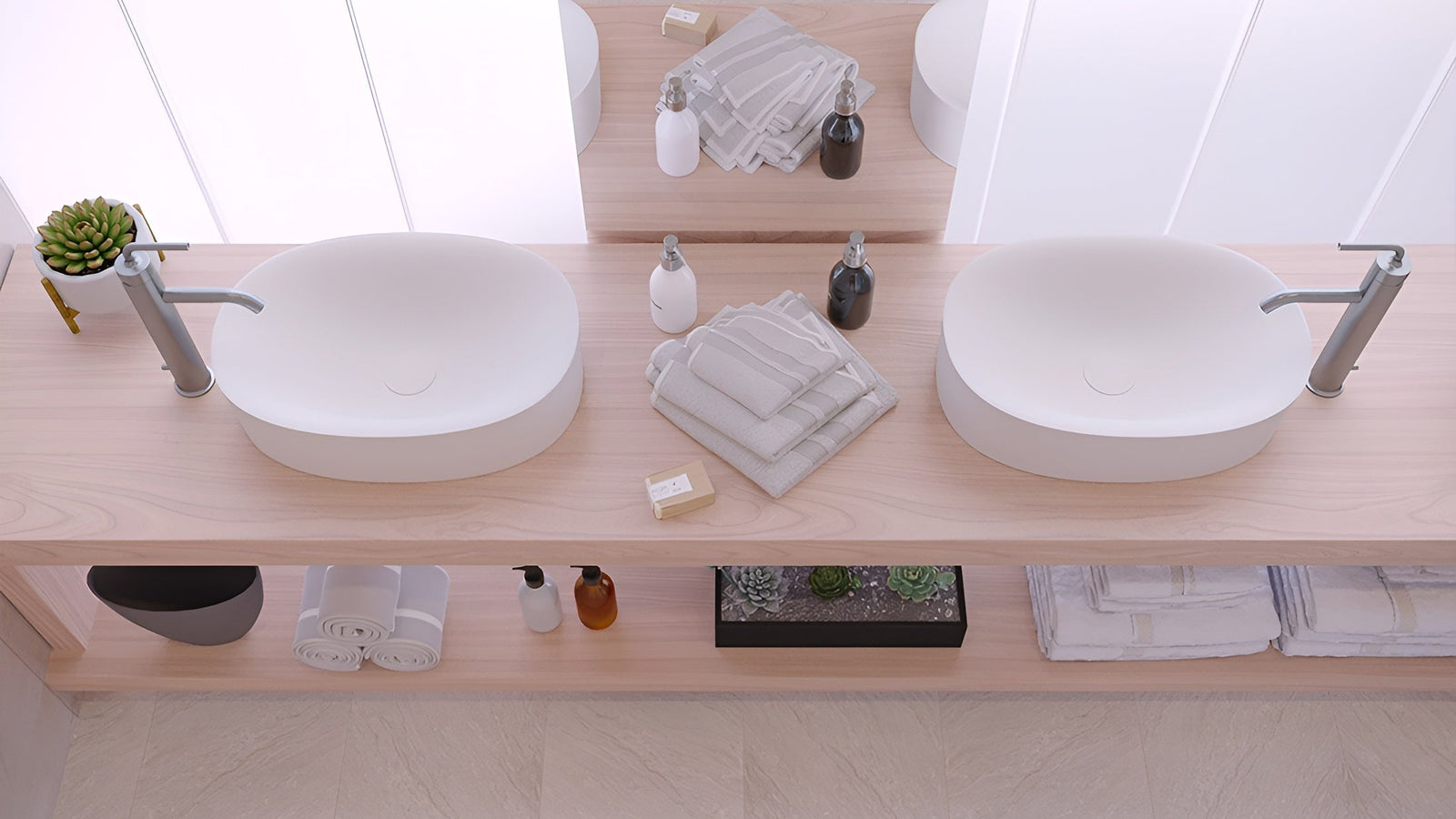
A vessel washbasin can be the better choice when you want the basin to sit on a vanity or counter surface rather than mount directly to the wall. This can create a more sculptural focal point while still allowing for storage or countertop presence below.
Vessel washbasins work especially well when the vanity or counter is part of the design. They may be less space-efficient than wall-attached models, but they can offer a strong visual statement in powder rooms, guest baths, and primary bathrooms.
You can explore our small vessel washbasins and large vessel washbasins to compare scale, shape, and design presence.
Before ordering a washbasin, confirm the finished wall space, projection into the room, plumbing location, drain placement, faucet compatibility, wall support, material care requirements, and installation requirements. These details matter more with wall-attached models because the fixture is supported by the wall and does not hide plumbing inside a cabinet.
You can explore our full washbasin collection, review the Wall-Attached Washbasins Guide, or use the Vanity & Washbasin Fit Assistant before making a final decision.
The Vanity & Washbasin Fit Assistant is designed as a planning aid, not a substitute for final measurement or contractor review. Always confirm dimensions, plumbing, wall support, faucet compatibility, material care requirements, and installation requirements before ordering.
A wall-attached washbasin mounts directly to the wall and keeps the floor more open. A vanity includes a cabinet or base, which usually provides more storage but also adds more visual weight and projection into the room.
Yes. Wall-attached washbasins can work very well in small bathrooms, powder rooms, and narrow guest baths because they reduce visual bulk and can preserve more usable floor space.
Choose a compact washbasin when clearance is limited or the room is primarily used for handwashing. Choose a larger washbasin when the bathroom has more wall space and the fixture is meant to have a stronger design presence.
Not necessarily. Solid surface washbasins usually offer a smoother matte appearance and a more contemporary, seamless-looking form, while ceramic washbasins offer a hard glazed surface and a more familiar fixture style. The better choice depends on the design direction, maintenance expectations, installation needs, and finish preference.
Concrete and terrazzo washbasins are not necessarily hard to maintain, but they require the right care routine. Their protective sealant or coating matters, so harsh cleaners, acids, abrasives, and improper cleaning products should be avoided. Always follow the manufacturer’s care instructions for the specific washbasin.
A vessel washbasin makes more sense when you want the basin to sit on a vanity or counter surface and create a more sculptural focal point. It is often better when counter presence, storage, or a furniture-like vanity layout is part of the design.
Confirm wall width, projection, plumbing placement, drain location, faucet compatibility, wall support, material care requirements, and installation requirements before ordering. These details are especially important for wall-attached washbasins.