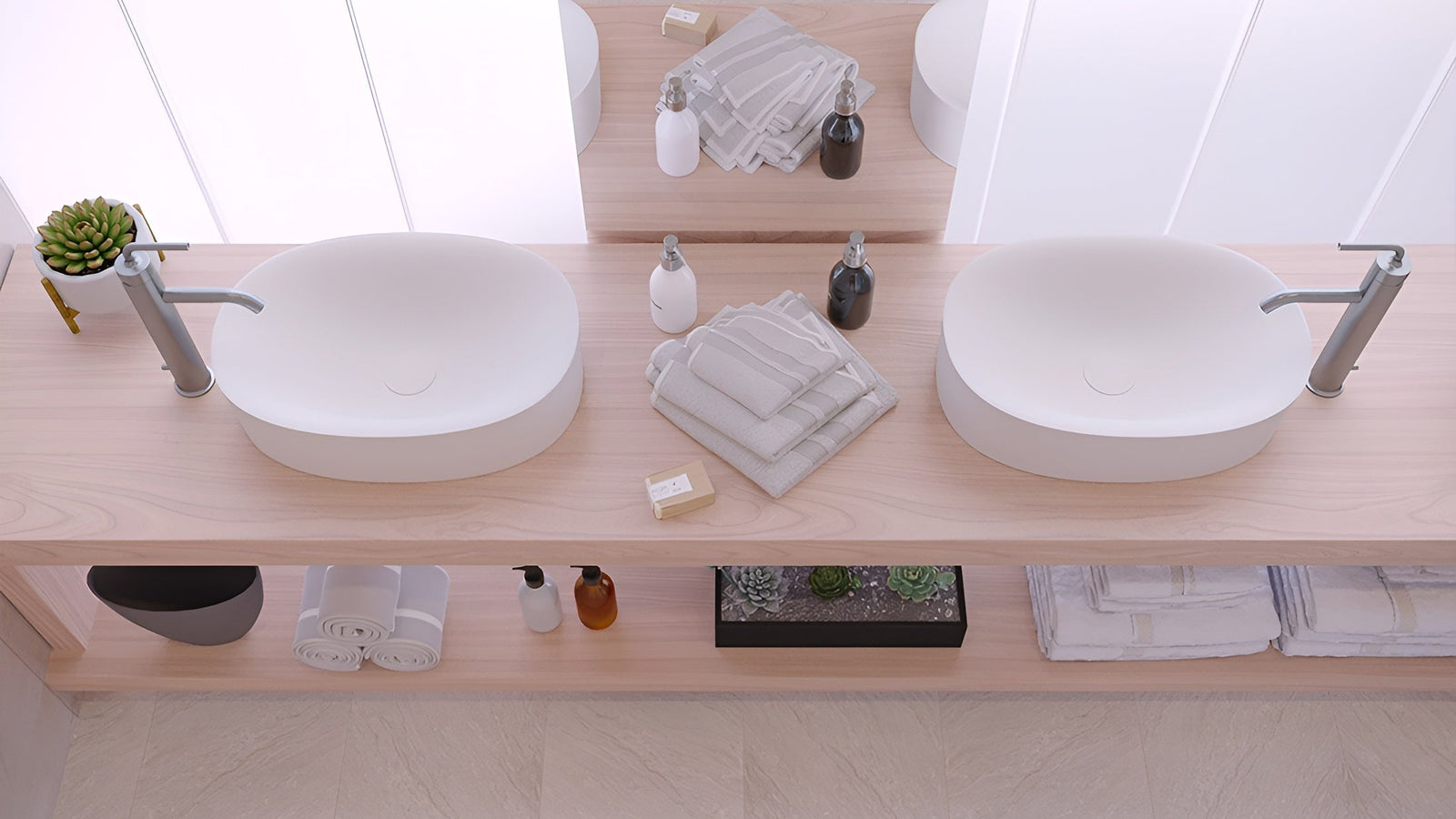
Solid surface is often used to describe premium bathtubs, washbasins, vanity tops, shower surfaces, and other bathroom fixtures. The term is useful, but it can also be misleading if every product in the category is treated as the same.
A $3,000 solid surface bathtub and an $8,000 solid surface bathtub may both use the same general material description online, but that does not mean they are made to the same standard. Material formulation, resin quality, mineral content, casting method, finish refinement, edge detail, drain design, quality control, packaging, and support can all affect the final product.
This guide explains what solid surface means, why quality can vary, and what to compare before choosing a solid surface bathtub or washbasin for your bathroom.
Solid surface is a manufactured composite material. It is typically made from mineral fillers, polymer resins, pigments, and other additives that are cast, molded, or fabricated into finished forms.
Many solid surface materials use aluminum trihydrate, often abbreviated as ATH, as a major mineral component. ATH is derived from bauxite and is commonly combined with acrylic, polyester, or blended resin systems. The exact formula varies by manufacturer and product line.
In bathroom fixtures, solid surface is valued because it can create clean shapes, smooth matte finishes, seamless-looking forms, and a more substantial feel than many lightweight fixture materials. It is commonly used for freestanding bathtubs, wall-attached washbasins, vessel washbasins, integrated vanity tops, and other design-forward bathroom pieces.
Solid surface is a material category, not a single universal formula. Two products can both be described as solid surface while differing in composition, density, resin quality, pigment stability, casting consistency, finishing process, and long-term performance.
One important difference is the resin system. Some solid surface materials are acrylic-based, some are polyester-based, and some use blended systems. The resin affects how the material cures, how it can be shaped, how it responds to UV exposure, how stable the color remains over time, and how the surface can be repaired or refinished.
Mineral content also matters. A higher-quality solid surface product is not only about having mineral filler in the formula. The balance between mineral content, resin, pigments, hardeners, and catalysts helps determine the finished surface, color consistency, weight, feel, and durability.
Ideavit’s solid surface technical information, for example, describes its material as a composite made primarily from ATH, with polymer resins, pigments, hardeners, and catalysts. It also notes that there are different quality levels in solid surface materials, and that the purity of the polymer can affect long-term color stability and yellowing resistance. That is the key point for shoppers: the phrase “solid surface” alone does not tell the whole story.
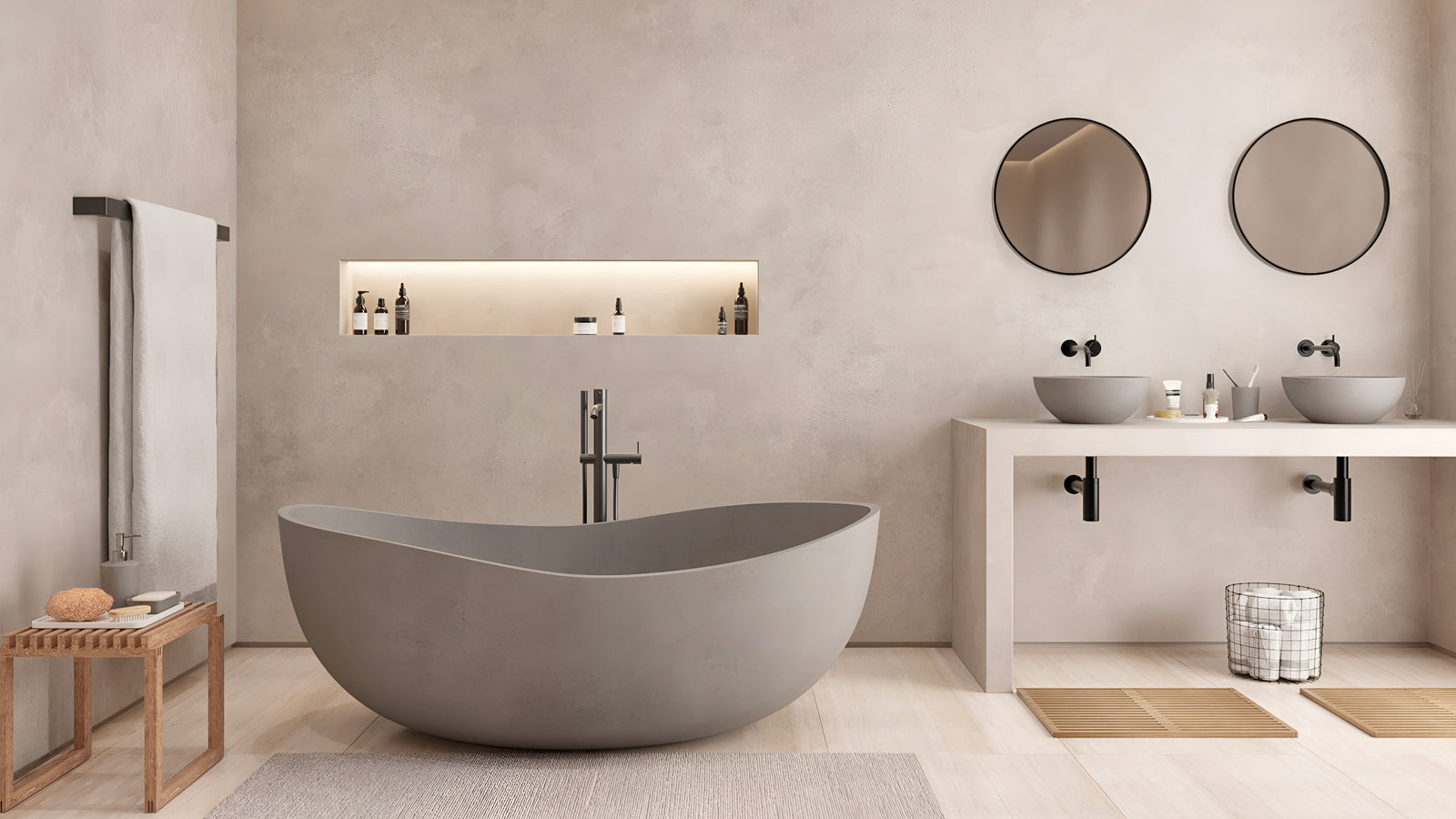
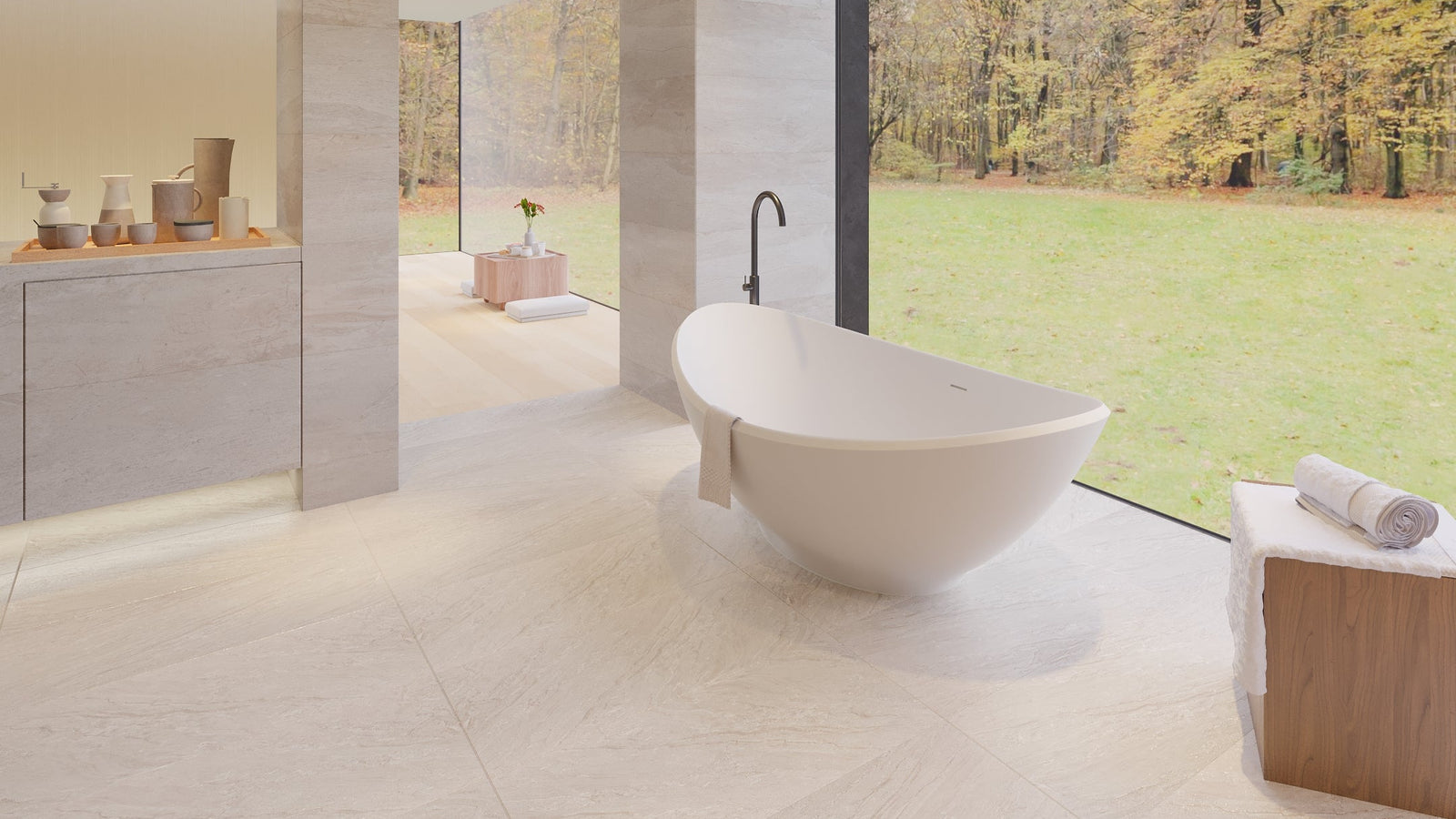
Solid surface bathtubs are usually chosen for their sculptural appearance, matte finish, substantial feel, and design presence. Compared with many acrylic tubs, a solid surface bathtub often feels heavier, quieter, and more furniture-like in the room.
The difference is not only visual. Bathtubs are large fixtures, so the material, mold quality, wall thickness, drain alignment, rim detail, internal shape, and final finishing all matter. A tub that looks similar in a product photo may feel very different in person depending on how it is cast, finished, packaged, and supported.
Comfort also matters. The inner slope, back angle, bathing depth, rim shape, and floor contour all affect how a bathtub feels in daily use. A premium bathtub is not priced only by material category. It may also reflect a more complex mold, better proportions, lower-volume production, more refined finishing, heavier freight requirements, and stronger distributor or manufacturer support.
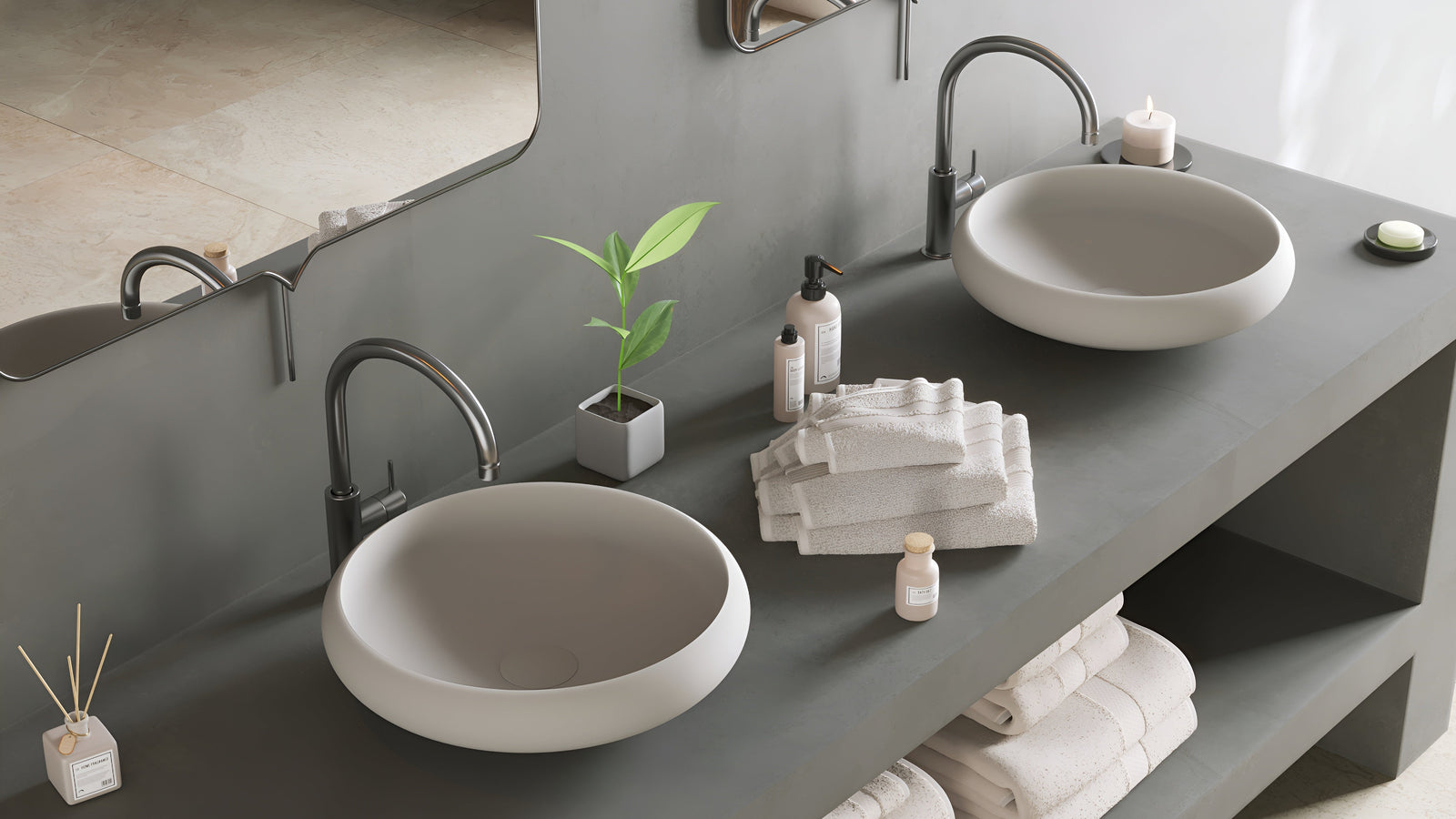
Solid surface washbasins can create a clean, architectural look, especially in compact bathrooms, powder rooms, and modern primary bathrooms. The matte finish and seamless-looking form can make the basin feel more intentional than a basic fixture.
With washbasins, the important details are slightly different than with tubs. Edge refinement, basin slope, drain position, overflow design, wall support, faucet compatibility, and projection into the room all matter. A small wall-attached washbasin, for example, may depend heavily on precise proportions because every inch affects clearance and daily use.
Vessel washbasins have their own considerations. Height, faucet reach, splash control, counter compatibility, and drain type should all be reviewed before ordering. A solid surface vessel basin can be highly sculptural, but the surrounding vanity or counter needs to be planned around it.
Acrylic bathtubs are common, lightweight, and practical for many projects. They can be easier to move, easier to install, and more affordable than many solid surface models. For some bathrooms, acrylic is a perfectly reasonable choice.
Solid surface is usually chosen when the goal is a more substantial matte appearance, a heavier feel, and a more design-forward presence. It can also offer a surface that may be restorable when scratches or surface marks occur, depending on the material and the severity of the damage.
The choice should not be reduced to “solid surface is better” or “acrylic is cheaper.” The better question is what the project needs. Acrylic may be preferred for lighter handling, broader availability, or budget control. Solid surface may be preferred for visual weight, matte texture, sculptural form, and a more premium overall impression.
Ceramic and vitreous china washbasins are hard, glossy, familiar, and widely used. They can be excellent choices when the design calls for a traditional glazed surface or a more classic bathroom fixture.
Solid surface washbasins usually offer a different design effect. The surface is typically matte rather than glossy, and the form can feel softer, warmer, and more architectural. Solid surface can also allow shapes that feel more integrated or sculptural than many standard ceramic basins.
Neither material is automatically better for every bathroom. Ceramic may be preferred for a crisp glazed finish and traditional familiarity. Solid surface may be preferred when the goal is a quieter matte look, seamless visual effect, or more contemporary fixture shape.
Overflow availability varies by model, size, and fixture type. Some solid surface bathtubs and washbasins include integrated overflow holes, while others are intentionally designed without one.
An overflow is not only the visible opening in the tub or basin. It must work with the fixture body, concealed water path, drain assembly, wall thickness, and final installation requirements. Because solid surface products are cast, molded, cut, bonded, and finished into specific forms, the overflow needs to be considered as part of the product design.
A no-overflow design does not automatically mean a fixture is lower quality. Many modern vessel washbasins, wall-attached washbasins, and freestanding tubs are designed without overflows to preserve a cleaner shape or simpler drain configuration. Likewise, an integrated overflow does not automatically make a fixture better. It simply means the overflow was engineered into that specific model.
Before ordering, always confirm whether the specific bathtub or washbasin includes an overflow and which drain type is compatible with that design.
Product photos can flatten meaningful differences. Two solid surface tubs or washbasins may both appear white, matte, and modern on a screen, but the differences may become more apparent in person.
Some of the most important differences are hard to judge from photos, including:
This is why price alone does not tell the full story. A lower-priced solid surface fixture may be suitable for some projects, but a higher-priced model may reflect more refined construction, more complex design, stronger quality control, better packaging, lower-volume production, or a more established support network.
Bathtubs show the widest price differences because they are large, heavy, and difficult to ship safely. A premium solid surface tub is not priced only by the material used to make it. The final cost can also reflect the size of the mold, amount of material, complexity of the shape, finishing labor, weight, freight handling, crating, damage risk, import logistics, warranty support, and brand positioning.
For example, a simple oval form may be less complex to produce than a tub with a more architectural shape, integrated overflow, back-to-wall profile, corner-friendly design, or more precise rim detail. Larger tubs also require more material and more careful handling during production and shipping.
That does not mean the most expensive tub is automatically the right tub. It means the comparison should go beyond the phrase “solid surface.” The best choice is the bathtub that offers the right combination of material quality, comfort, size, design, installation suitability, delivery support, and long-term value for the project.
Solid surface is generally valued for being non-porous, easy to clean, and restorable. Many common surface marks and light scratches can often be improved with approved cleaning methods or light abrasive refinishing, depending on the specific material and manufacturer guidance.
However, repairability should not be treated as unlimited. Surface-level marks are different from deep damage, structural damage, improper installation, or chemical damage from harsh products. Always follow the manufacturer’s care instructions for the specific fixture.
In general, avoid petroleum-based solvents, paint thinners, harsh chemicals, and cleaning products that the manufacturer does not recommend. Use the approved cleaning method for the specific product, especially on matte white solid surface fixtures.
Before choosing a solid surface bathtub or washbasin, review more than the product name and material label. The details below can affect installation, daily use, and long-term satisfaction.
For bathtubs, use our Bathtub Fit Assistant and review the Bathtub Size Guide before making a final decision. For washbasins and vanities, use our Vanity & Washbasin Fit Assistant to compare size, projection, and clearance.
Solid surface can be an excellent choice for premium bathrooms, but the material category should be reviewed carefully. Look at the full product, not only the material label. A well-made solid surface fixture should combine the right formulation, refined finish, suitable dimensions, compatible drain design, reliable packaging, and clear manufacturer support.
You can explore our Ideavit bathtubs, review our washbasin collection, or compare layout details using our bathroom planning tools before choosing a final fixture.
All planning tools and guides are intended as aids, not substitutes for contractor verification. Final dimensions, plumbing, drain compatibility, wall support, floor support, delivery access, and installation conditions should always be confirmed before purchase.
Solid surface is usually a manufactured composite made from mineral fillers, polymer resins, pigments, and other additives. Many solid surface materials use aluminum trihydrate, or ATH, as a major mineral component, combined with acrylic, polyester, or blended resin systems.
No. Solid surface is a broad material category. Products can vary in resin quality, mineral content, color stability, casting method, finish refinement, edge detail, drain design, quality control, packaging, and manufacturer support.
Price can reflect more than the material category. A higher-priced solid surface bathtub may involve a more complex mold, more material, heavier construction, better finishing, lower-volume production, integrated overflow design, stronger packaging, freight handling, warranty support, or brand positioning.
Color stability depends on the material formulation, resin quality, pigments, UV resistance, care, and environment. Higher-quality solid surface materials are designed to resist discoloration, but not every product in the category performs the same way.
Many light scratches and surface marks on solid surface can often be improved or repaired using manufacturer-approved methods. Deeper damage, structural damage, or chemical damage may require professional repair or may not be fully restorable. Always follow the specific manufacturer’s care instructions.
Not always. Some solid surface tubs and washbasins include integrated overflows, while others are intentionally designed without one. The right choice depends on the model, drain design, installation requirements, and how the fixture will be used.
Solid surface usually offers a heavier matte feel and stronger design presence, while acrylic is lighter, common, and practical for many projects. The better choice depends on budget, installation conditions, handling requirements, comfort, design preference, and the overall goals of the bathroom.
Yes. Solid surface can be an excellent choice for wall-attached and vessel washbasins when the goal is a clean matte finish, sculptural shape, and refined design presence. Before ordering, confirm the size, projection, drain type, overflow design, faucet compatibility, and installation requirements.